
*2027 Will Be Seamless, But INEC Can’t Guarantee Perfect Election
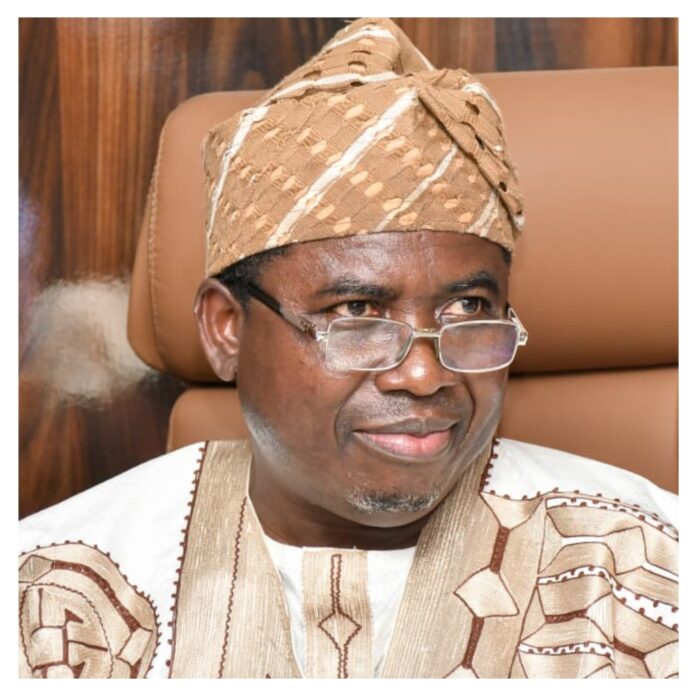
THE Independent National Electoral Commission (INEC) has assured Nigerians that the technical glitches that marred the electronic transmission of results in the 2023 general elections will not recur in 2027.
Its Chairman, Joash Ojo Amupitan, however, stressed that the Commission cannot guarantee 100 per cent perfect election in 2027 as far as electronic transmission of results is concerned, though he promised that the the 2027 presidential election will be the best in the history of Nigeria.
Amupitan speaking at citizens’ townhall on the Electoral Act 2026 in Abuja, on Sunday, March 1, reiterated that the Commission has eliminated the technical lapses that caused failure to upload polling unit results in real time to the INEC Result Viewing Portal (IReV) during the last presidential poll.
While expressing confidence that the Commission’s improved preparations and testing would ensure seamless transmission, he added: “The glitch is eliminated; by God’s grace, it will not surface in Nigeria.
“Election anywhere in the world is now about technology, but before deploying any technology, it is important to test it thoroughly.
“We will try to give Nigerians a near-perfect election.”
Amupitan stated that ehe legal provisions allowing for alternative collation methods are merely safeguards and not an indication that the commission expects the failure of the electronic transmission, noting: “It is just a proviso, a safety. If it fails, results must still be transmitted.
“But our determination is that it will not fail during my tenure.”
He said Nigeria needs a simple language legislation where it will be possible for every Nigerian to understand and appreciate the provisions of every section of Electoral Act 2026, citing the recent Federal Capital Territory (FCT) Area Councils elections, where results came out on time in five area councils, but in Kuje, the result did not come out on time in one of the wards until the following day.
Insisting that successful election should be determined based on perfection of logistics, the INEC boss stated: “Number one, if you want to measure whether an election is successful, you have to determine whether the election started as advertised. And we advertised the election for 8.30am.
“Number two, if the election is peaceful; number three, if we’re able to manage the result very well, that is result management, and then declaration of results, then you can say you have a successful election.
“As a regulatory body, we were determined to achieve all this. Nonetheless, we have to admit that there was some logistics issues, some were purely human, which we are trying to address.
“Let me just appeal to Nigerians, because I have noticed now that what Nigerians desire is a perfect election. And I will strive as much as possible to give this country the best election.
“However, we may not be able to achieve a 100 per cent perfect election for now. But as far as electronic transmission of results is concerned, I said it before FCT Area Council that we have the capacity to transmit the results, and that we’re going to transmit the results.
“The only concern was real time. What is real time? For instance, if you go, you use your app to make a transfer from your account. Even in Abuja town, you are transferring N50,000 to Mr. B, and from your app, the amount has gone.
“But the person may not receive the alert until another 30 minutes, another hour or even in the evening. So, those are some of the things. And when you say it is real time, as soon as it is done, it must be received.
“So, result management and logistics are two basic issues that, from our own end, we are trying to see how best we are able to manage it very well, so as to enhance the transparency and credibility of the system.
“Glitch is eliminated. The glitch, by God’s grace, will not surface in Nigeria and when I even look at the provision to Section 63 of the Electoral Act, during the last FCT election, apart from that delay, we didn’t have any transmission failure, meaning that it is just a provision, a safety if it fails. And during my tenure, it will never fail. That is the determination.
“Even if it fails, the result must be transmitted. But the only problem is if it fails to do real-time transmission, as we had in that ward.
“That is the major problem. Now, talking, addressing about the glitch, election now, anyway, is about technology. But before you deploy any technology, it is important for you to test that technology very well.
“So, my own audit of the 2023 election was that while the device was tested within the states, for instance Osun and Ekiti elections, however, when it came to the federal election, especially the presidential election that now became interstate, it was not properly tested.
“So, one of the things we are trying to do before the election is to ensure that this transmission across the state must not fail.
“By the grace of God, election of 2027 will be the best election that Nigerians will have, because Nigerians of 2023 is different from what you have in 2027. People are much more aware.”
“One of the things we are trying to do before the election is to have a mock presidential election, so that we are sure that this transmission across the state must not fail.
“We want a process that guarantees the legitimacy and confidence people want to see in their system. When people trust INEC and their leaders, the country will move forward.”
Recall that the Commission recently rescheduled the 2027 elections timetable, with presidential and national assembly elections slated for Saturday, January 16, while those of governorship and state houses of assembly would hold on Saturday, February 6, following President Bola Tinubu’s assent to the Electoral Act amendment Bill passed by the National Assembly.
INEC said aligning party regulations early with the Electoral Act 2026 would significantly reduce pre-election litigation and administrative disputes that often diverted attention from election preparation and delivery.
Amupitan’s Chief Press Secretary, Adedayo Oketola, in a statement, said the Technical Workshop on the Revision of the INEC Regulations and Guidelines for political parties would bring together National Commissioners and Directors across operational departments, legal experts, election administrators and institutional stakeholders to undertake a detailed clause-by-clause review of the existing 2022 framework.
Oketola stated: “The recently enacted Electoral Act 2026 introduces significant legal and operational changes affecting political party administration, candidate nomination processes, compliance obligations, dispute resolution mechanisms, and the Commission’s regulatory mandate.
“Consequently, INEC is reviewing its subsidiary regulations to ensure full legal alignment and operational clarity well ahead of the next electoral cycle.
“Beyond legal compliance, the commission is drawing lessons from previous elections to strengthen preventive regulation.
“Persistent challenges such as opaque party primaries, membership disputes, weak financial disclosure practices and exclusionary participation patterns have contributed to avoidable litigation and electoral uncertainty. Addressing these gaps early remains central to the commission’s preparations for 2027.”
Amupitan noted that to support evidence-based reforms, INEC was mainstreaming findings from the Political Party Performance Index (PPPI), a diagnostic assessment tool that identifies systemic weaknesses in party governance and compliance practices across the country, to move regulatory oversight from reactive enforcement to proactive supervision anchored on measurable standards.
On the reform process, he stressed that credible elections usually begin long before polling day, noting: “For elections to inspire public confidence, the institutions that produce candidates must themselves operate transparently and within the law.”


