
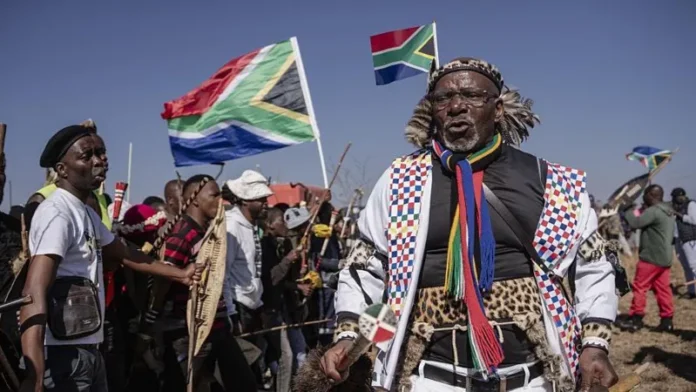
HEAVY security personnel has been deployed across South Africa over fears that anti-immigration protests could turn violent, as President Cyril Ramaphosa urged those planning to take part to do so without “intimidation, threats or ultimatums.”
The planned protests mark an unofficial deadline set by campaigners for all undocumented foreigner to leave the country.
Many have already fled to escape violence and intimidation. South African police said 25,000 have been repatriated so far, most are from other African countries.
One undocumented Malawian told the BBC he was “happy to be going back,” but “heartbroken” to be leaving behind four young children.
Johannesburg, where one of the protests is planned, was unusually quiet. All the shops in the vicinity of where marchers are due to gather are closed, while Police visibility is high on the city’s major streets.
Police said that five people were arrested in Johannesburg’s biggest township, Soweto, for allegedly looting a foreign-owned shop, and five others for allegedly breaking into a tuck shop in Hammarsdale in KwaZulu-Natal province.
Many businesses in central Durban, the main city in the province, were shut.
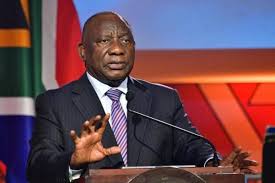
Ramaphosa has repeatedly warned demonstrators to act peacefully and responsibly, while also accepting the need for immigration reforms, saying: “Some foreign nationals who live in South Africa are here lawfully.
“They work, study, raise families, invest in our economy and contribute positively to our society. They too are entitled to the protection of our laws and our Constitution.
“The right to protest and freedom of expression does not allow people to threaten or intimidate others, or to engage in acts of vandalism or violence.”
There are over three million documented foreign nationals in South Africa, according to official figures.
Ahead of the deadline, thousands of migrants have been awaiting processing in temporary camps for several weeks out of fear for their safety.
In Durban, which has seen some of the biggest protests, white tents housing mostly Malawians were being dismantled as authorities race to clear the transit camp.
Women in colourful sarongs sat on top of their belongings, waiting in line to board a bus home to Malawi.
One man, Nelson Mbewe, told BBC he had gone to South Africa in search of employment to support his family in Malawi, adding: “But we’ve faced challenges, they’re saying we should go back home because we do not have the right documents.
“They say we are Makwerekwere,” a xenophobic slur used to refer to African migrants from other countries, Mbewe said.
“It’s their country, so what can we do? That’s why we have accepted that we just have to (unwillingly) go back home.”
Hassan Phiri, a Malawian who is still waiting to be processed, had a message for the protesters. “All I want to say to South Africans is that we are all one. No matter what is happening, no matter what will happen, Africa must remain Africa.
“Africa can’t be Africa without South Africa… without Malawi, without anywhere,” he told the BBC, adding: “So, whatever will happen, we must love each other and stick together as Africa.”
In Durban, migrants have been taking buses to take them home
Anti-migrant marches have been authorised for Tuesday in Durban, Johannesburg and other cities. But the authorities have warned organisers to ensure there is no violence, but said they were prepared for any potential disruption.
The Police said traditional weapons were not allowed, but this could lead to tension between protesters and the Police, because many of the protesters are ethnic Zulus, who always take their shields, whips and sticks when they go on marches.
According to the government, over 12,000 immigrants have been deported or repatriated since a wave of protests began earlier this year.
Nigeria, Ghana, Malawi, Mozambique and Zimbabwe have been organising repatriations by air or bus over the last few weeks, with about 3,500 foreigners volunteering to leave.
South African authorities claim over 500 Nigerians repatriated did not have correct papers, which Nigeria has disputed.
Xenophobia has long been an issue in South Africa and has sometimes led to violence. According to the African Centre for Migration and Society’s (ACMS) xenophobic violence tracker, Xenowatch, two people have been killed this year.
In 2008, over 60 people died during a wave of rioting against non-South Africans.
Ahead of the protests, South African cities shuttered, with workers choosing to stay at home, shops shut and buses sat idle across on Tuesday, as fears mounted that planned anti-immigrant marches would descend into violence.
Many foreigners from African countries avoided coming to work, and thousands had already fled ahead of Tuesday’s deadline set by the demonstrators for all undocumented migrants to leave.
According to Reuters, landlords in the main city Johannesburg and port city of Durban were evicting foreign tenants for fear of their buildings being vandalised, witnesses said.
“All these people, they were chased out by their landlords. All these people are legal; they have documents,” Mabako Majole, a leader of the Congolese community, said next to a crowd of 100 people sleeping on the street in downtown Durban.
Police and military were deployed to the streets to try to keep order during the marches in several cities, which are expected to attract many thousands of mostly poor or unemployed South Africans.
“The state has the duty and obligation to ensure that those that are demonstrating do so peacefully,” Deputy National Commissioner for Policing, Tebello Mosikili, told a news conference late on Monday.
The latest anti-immigrant sentiment and a failure by Police so far to protect victims of attacks, have tarnished South Africa’s post-Mandela reputation as a human rights defender, and strained its relations with the rest of the continent.
Statements by politicians have also endorsed the marchers’ concerns, even while they condemned thuggery.
“South Africans’ … deep concerns about illegal immigration … are real and they deserve to be heard,” Ramaphosa re-echoed in a statement on Monday, adding: “But the right to protest … does not allow people to threaten or intimidate others, or to engage in acts of vandalism or violence.”
With anti-migrant sentiment escalating, Malawian John Allen threw some clothes in a bag, said goodbye to his South African girlfriend and their one-year-old son, and left to catch a bus out of the country.
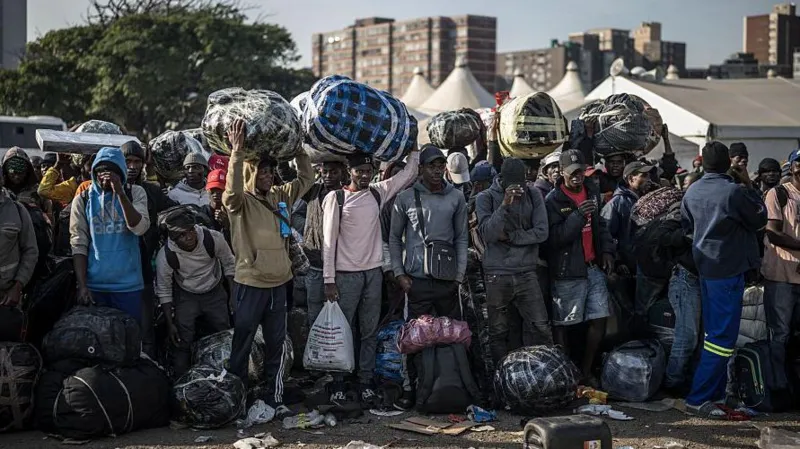
He had waited in a makeshift camp in the city of Durban for four days with thousands of other people hoping to depart before June 30.
“The reason I would like to stay is, I feel bad for my child. He’s too young. When I’m gone, who’s going to support him?” said Allen, 30.
The child’s mother, who is South African, only earns about 500 rand ($30) a week as a cleaner, but Allen had been earning four times that doing contract work for a manufacturing company, although he was undocumented.
“There are two options: I can lose my life or I can leave,” he told Reuters, standing with other men amid piles of luggage, waiting for a bus.
At least hundreds of people still remained at the giant empty lot in Durban on Monday, where Malawians flocked for safety ahead of Tuesday’s planned protests to mark the deadline.
Although they say they target only illegal immigrants, the vigilantes often don’t discriminate, and many migrants whose status is entirely legal have been attacked or had their property trashed.
Indeed, the days after June 30 will determine which way South Africa for (black) South Africans and citizens and governments of other countries in the continent, especially those impacted by xenophobia.


