
ASUU Ends NEC Meeting Without Declaring Strike
•Awaits Outcome Of Gbajabiamila’s Intervention
• ‘FG Attempting To Turn Lecturers To Casual Workers’
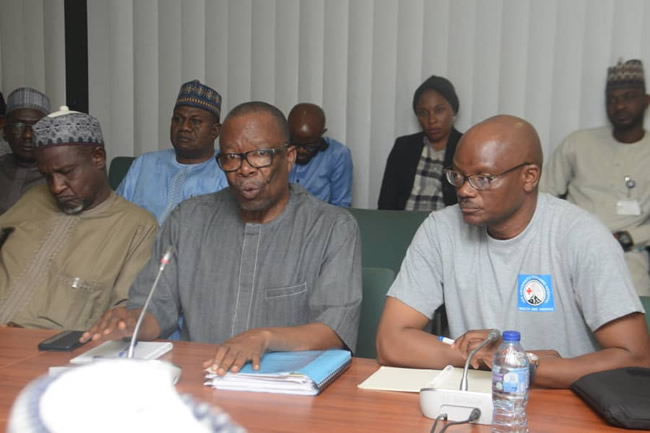
THE Academic Staff Union of Universities (ASUU) ended its Natural Executive Committee (NEC) meeting late Monday, November 7 resolving not to embark on another strike, following the payment of half salaries to members by the federal government.
Instead, it resolved to await the outcome of the intervention of Speaker of the House of Representatives, Femi Gbajabiamila, in its disagreement with the federal government over alleged non-implementation of the 2009 agreement by the latter.
Members of the NEC, at the meeting held at the University of Abuja campus headquarters could not agree on the issue of embarking on another round of strike.
While some members resolved not to explore the strike option in getting the government to address the contending issues against the push for declaration of total and comprehensive strike in public universities across the country by others.
Those against the strike argued that it would be wrong to embark on another action, thereby compelling students who had already returned to their various schools, following earlier suspension of the action, to return home.
Gbajabiamila’s statement that government would not pay members full salaries further deflated the argument by those who had pushed for strike as a last option, as some members felt since the suspension of the strike was at the Speaker’s instance, following his meeting with President Muhammadu Buhari, it would be wrong to resume action when he was still pushing to have the federal government rescind its decisions on ‘no-work, no-pay policy.’
Meanwhile, ASUU has accused the federal government of attempt to turn lecturers to casual workers. A statement by its President, Prof. Emmanuel Osodeke, condemned the ‘pro-rata’ payment to the union’s members.
He said the union’s action was a display of manifest trust in the judiciary and other institutions and organs of government to always put national interest above all other considerations, adding: “This, we believe, as a union of thinkers, intellectuals and patriots, will not only aid the process of amicable resolution of the crisis, but also set the tone for smooth industrial relations between government and Nigerian workers at large.”
He noted that government’s response, especially its ‘pro-rata’ payment of October salaries of academics, portrayed them as daily paid workers, adding: “This is not only an aberration, but also a contravention of all-known rules of engagement in any contract of employment for academics the world over.”
Osodeke explained that ASUU’s NEC deliberated on the development and noted with dismay that “paying academics on pro-rata basis, like casual workers, is unprecedented in the history of university-oriented labour relations and, therefore, condemned this attempt to reduce Nigerian scholars to casual workers in its entirety.”
The federal government has defended the pro-rata payment to ASUU members in October, saying they could not be paid for work not done.
The Minister of Labour and Employment, Dr. Chris Ngige, through the ministry’s spokesman, Olajide Oshundun, also dismissed media reports that the government was biased in paying the university teachers, saying: “They were paid in pro-rata to the number of days that they worked in October. Pro-rata was done because you cannot pay them for work not done. Everybody’s hands are tied.”
Gbajabiamila later justified the government’s action, but added that the house was making arrangements for N170billion Fund for ASUU in next year’s budget, with an additional N300 billion in revitalisation funds to improve the infrastructure and operations of federal universities.
He stated that the ‘no work no pay’ policy embarked on by the federal government during the period of strike is premised on the law based on the government’s legitimate interest in preventing moral hazard and discouraging disruptive industrial actions.
“Nonetheless, interventions have been made to explore the possibility of partial payments to the lecturers. We look forward to a favourable consideration by President Muhammadu Buhari, who has manifested his desire to what is prudent and necessary to resolve all outstanding issues.
“Implementing meaningful change takes time, especially when appropriations and modifications to systems, such as IPPIS are required. Therefore, I urge all parties to be patient and grant each other the presumption of goodwill to the extent necessary to achieve our shared objectives. This is not a time for political brinkmanship.”


