
*Macualay, Vatsa, Ogoni Nine, Get Posthumous Pardon
*Council Endorses Repeal, Re-enactment Of Police Trust Fund Act
*Okays Sunset Clause Removal, Federation Account Deduction Hike
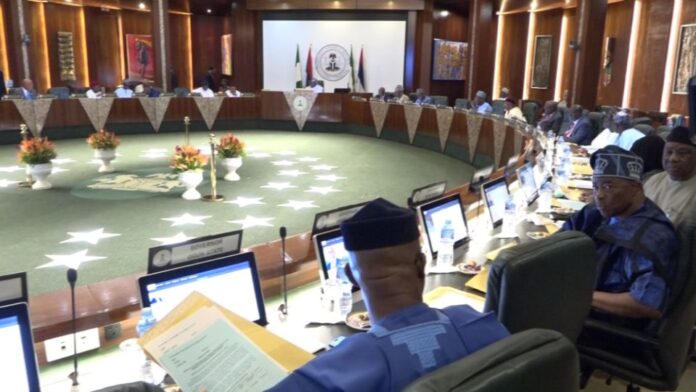
THE National Council of State, at its meeting at the Presidential Villa, Abuja, on Thursday, October 9, approved President Bola Tinubu’s pardon for 175 inmates across the country, in exercise of the presidential prerogative of mercy.
The Council is made up of former heads of state, state governors and other statutory members.
The Presidency, in a statement, said the action was aimed at decongesting correctional facilities and promoting restorative justice and reflects the administration’s commitment to tempering justice with mercy, while ensuring that deserving inmates are given a second chance to reintegrate into society.
The presidential prerogative of mercy, enshrined in Section 175 of the 1999 Constitution (as amended), empowers the President to grant pardons, reprieves, or commute sentences and is exercised after careful consideration of the recommendations of the Committee, which assesses factors, such as age, ill health, good behaviour or cases of miscarriage of justice.
Briefing State House Correspondents after the meeting, Kaduna State Governor, Uba Sani, explained that the Council considered a report from the Advisory Committee on Prerogative of Mercy, presented by the Attorney General of the Federation and Minister of Justice, Lateef Fagbemi, which recommended various clemency measures.
He stated that out of the 175 beneficiaries, 82 inmates were granted presidential pardon, 65 had their sentences reduced, while seven death sentences were commuted to life imprisonment.
He, however, declined to provide the names of the beneficiaries.
The approval is expected to pave the way for the formal release or re-sentencing of the affected inmates in the coming weeks.
Tinubu also posthumous pardons to Herbert Macaulay, Maj-Gen. Mamman Jiya Vatsa and the Ogoni Nine, alongside 82 inmates, as well as sentence reductions for 65 others.
Macaulay, a nationalist and co-founder of the National Council of Nigeria and the Cameroons (NCNC), was convicted by British colonial authorities in 1913 and banned from public office. He died in 1946
Vatsa, a military officer, was executed for treason in 1986 by the Gen. Ibrahim Babangida regime.
Others, including a former member of the House of Representatives, Farouk Lawan, Anastasia Daniel Nwaobia, Hussaini Umar and Ayinla Saadu Alanamu, were pardoned after demonstrating genuine remorse and readiness to reintegrate into society.
Other beneficiaries were Nweke Francis Chibueze, serving a life sentence for drug offences, and Nwogu Peters, who had served 12 of a 17-year sentence for fraud.
Remarkably, the Ogoni Nine- Ken Saro-Wiwa; Saturday Dobee; Nordu Eawo; Daniel Gbooko; Paul Levera; Felix Nuate; Baribor Bera; Barinem Kiobel; and John Kpuine, who were executed in 1995 under the Gen. Sani Abacha regime, received posthumous pardon, while national honours were awarded to the Ogoni Four- Albert Badey, Edward Kobani, Samuel Orage and Theophilus Orage.
Based on the recommendations of the Presidential Advisory Committee on the Prerogative of Mercy (PACPM), the President granted clemency to 82 inmates, reduced the prison terms of 65 others and commuted the death sentences of seven inmates to life imprisonment.
The 12-member PACPM, chaired by the Attorney General of the Federation (AGF) and Minister of Justice, Lateef Fagbemi (SAN), in its report presented to the Council, detailed the process of reviewing 294 cases, including applications on behalf of 119 inmates.
Out of the 175 inmates interviewed, 82 were recommended for clemency, two for pardon, 65 for sentence reduction and seven for commutation, while 15 ex-convicts were recommended for presidential pardon, 11 of whom are deceased, including the Ogoni Nine.
The recommendations were based on criteria, such as old age (60 years and above), terminal illness, youth (16 years and below), long-term incarceration with good conduct and evidence of rehabilitation through vocational skills.
Other PACPM members were Akinlolu Olujinmi; Alkasum Abba; Nike Sidikat Ijaiya; Augustine Utsaha; Onwusoro Maduka (Secretary); representatives from the Nigeria Police; Correctional Service; National Human Rights Commission; Nigeria Council of Islamic Affairs (NSCIA) and Christian Association of Nigeria (CAN).
The Council also approved the repeal and re-enactment of the Nigerian Police Trust Fund (NPTF) Establishment Act, 2019, to ensure sustainable funding and long-term planning for police operations across the country.
Minister of Police Affairs, Ibrahim Gaidam, said the Fund, created in 2019 with a renewable lifespan of six years, was designed to provide dedicated financial resources for training, retraining, logistics, equipment, infrastructure and modernisation of the Nigeria Police Force (NPF).
Gaidam explained that the NPTF plays a critical role in enhancing crime prevention, public safety and emergency response capacity, supporting technology investments, welfare improvement and accountability in policing.
He lamented that the six-year sunset clause in the current law limited the Fund’s capacity for long-term planning, thereby hindering sustainable support for policing needs; the Council approved its removal, thereby transitioning the Fund into a permanent agency.
He disclosed the Council okayed the upward review of the statutory deduction from the Federation Account to the Fund from 0.5 per cent to 1 (One) per cent to strengthen financial inflows for police modernisation and capacity building and directed the AGF to incorporate these approvals into a proposed Executive Bill to be transmitted to the National Assembly.
According to him: “All these prayers were approved without any objection. These decisions will ensure sustained investment in training, equipment, welfare and technology to strengthen the Nigerian Police Force (NPF).”


