
BY PROFESSOR STEVE AZAIKI
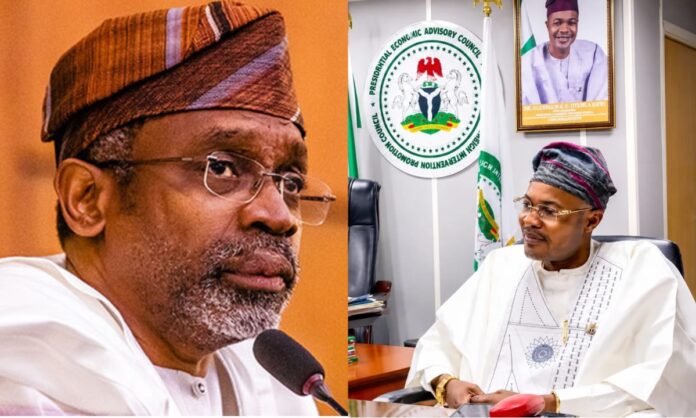
FEMI Gbajabiamila is a veteran Nigerian politician and lawyer. His journey from a rigorously-trained legal practitioner in domestic and international jurisdictions to the peak of parliamentary leadership in Nigeria is defined by institutional commitment.
Educated at the University of Lagos and subsequently at John Marshall Law School in Atlanta, Georgia in the United States (US), Gbajabiamila built a formidable legal foundation before entering partisan politics in the early 2000s.
His tenure representing Surulere 1 Federal Constituency of Lagos State for six consecutive terms was characterised by an active opposition voice during the Peoples Democratic Party (PDP) era, and a highly disciplined approach to legislative drafting.
As Minority Leader in the 7th Assembly of the House of Representatives, and subsequently Majority Leader in the 8th Assembly, he was central to the merger that birthed the All Progressives Congress (APC).
Succeeded eventually by Tajudeen Abbas, Gbajabiamila’s ascension as the Speaker of the 9th House of Representatives cemented his reputation as a consensus-builder who prioritised legislative-executive stability.
Notably, Gbajabiamila’s career has been punctuated by acts of principled defiance that are rare in Nigeria’s political landscape. In 2011, he became one of the youngest Nigerians to reject a national honour of Officer of the Federal Republic (OFR), arguing that the national honours system required comprehensive reform to restore its original intent.
Furthermore, his legislative record includes moving the historic motion for the invocation of the “doctrine of necessity” during the prolonged illness of the late President Umaru Musa Yar’Adua, an intervention that stabilised the country’s democracy during a critical constitutional vacuum.
This history of institutional defence stands in stark contrast to the transactional caricature being projected by his detractors.
In June 2023, Gbajabiamila resigned his House seat to become Chief of Staff to President Bola Tinubu. His long service and leadership earned him national honours (he holds the CFR title) and wide recognition as a committed lawmaker.
My personal history with Gbajabiamila reinforces this view. I recall with pride when he was honoured in 2018 as among the first honourees of the Silverbird’s Legislative Award, alongside then deputy senate president, Ike Ekweremadu.
Such awards underscore that he has long been viewed as a respected leader in Nigeria’s legislature, hardly the profile of someone bent on abusing office.
For over two decades, the Silverbird Man of the Year Awards has stood as one of Nigeria’s most respected recognition platforms. They honour individuals who have demonstrated exceptional leadership, influence and tangible contributions to national development across diverse sectors, from politics and public service to business and the arts.
Being an inaugural winner in the legislator category was no small feat; it was a testament to Gbajabiamila’s early impact and the esteem in which he was held by impartial observers.
As current Chief of Staff to the President, his role places him at the epicenter of governance. Yet, recent allegations surrounding the so-called Presidential Foreign Intervention Promotion Council (PFIPC) have thrust him into an unwelcome spotlight.
This controversy appears less like a genuine accountability exercise and more like a calculated political hit job designed to smear a key ally and sow discord at the highest levels ahead of next year’s general elections.
Chief Of Staff And The ‘Kitchen Cabinet’
THE office of the Chief of Staff to the President is inherently a lightning rod for political hostility. Within the framework of Nigeria’s presidential system, the Chief of Staff functions as the coordinator of the executive office, manager of the President’s scheduling and the ultimate gatekeeper of information flow.
As a core member of the President’s “kitchen cabinet,” the occupant of this office exerts profound influence over appointments, policy priorities and the execution of the administration’s strategic agenda.
Because access to the President is a highly valued political commodity, the Chief of Staff must regularly manage competing demands from powerful interest groups, party stalwarts and lobbyists.
This “guardian of the palace” function naturally breeds resentment, making the office the primary target for proxy wars and manufactured scandals.
The broader strategic implications of this controversy extend far beyond the immediate legal dispute, pointing directly to the upcoming electoral cycle. In the grammar of Nigerian political warfare, character assassination is a calculated tool used to sow deep-seated discord within the Presidency.
By launching sensationalised, unverified corruption charges against key pillars of the administration, notably the President himself and his Chief of Staff, political adversaries seek to trigger internal friction, disrupt administrative coherence and weaken the executive alliance ahead of the polls.
The ultimate objective of this character assassination attempts is to paint the highest offices in the land as fundamentally compromised, creating a crisis of public confidence that can be politically harvested in the coming elections.
Because of this trusted position, any attack on the President’s chief of staff naturally reverberates through the Presidency.
In recent months, Gbajabiamila has indeed been targeted by sensational media claims, which he insists are entirely false. On July 16, he filed a N15billion defamation lawsuit against Adeniyi Adeyemi, who had publicly accused him of demanding an illicit “kickback” on a federal project.
The lawsuit and accompanying legal filings explicitly deny every allegation. Gbajabiamila said he never met or communicated with Adeyemi or authorised anyone to act for him. His lawyers characterise Adeyemi’s statements as “false, malicious and defamatory,” made with the intent of damaging a reputable public servant.
The PFIPC ‘Scandal’ And Legal Fight
THE factual core of the PFIPC scandal reveals a sophisticated web of institutional impersonation rather than an executive-backed scheme. The individual at the center of the controversy, Adeyemi, claimed to be the director general of the PFIPC, an organisation that the Presidency has repeatedly declared a fictitious government entity.
Remarkably, this fraudulent council had managed to establish an operational presence within the Federal Secretariat, obtained a federal budget code, secured accounts with the Central Bank of Nigeria (CBN) and even secure a combined allocation of over N1.3billion alongside the Presidential Economic Advisory Council (PEAC) in this year’s Appropriation Act. This institutional infiltration highlights systemic administrative vulnerabilities.
However, the assertion that Gbajabiamila was a co-conspirator in this operation is completely debunked by the timeline of his interventions. Far from trying to shield or profit from the entity, the chief of staff was the first official to flag the fraudulent activities.
In October last year, Gbajabiamila petitioned the Department of State Services (DSS) and the Nigeria Police Force (NPF) regarding the activities of syndicates forging official appointment letters from his office.
On June 8, this year, he issued a comprehensive public disclaimer, warning public institutions and citizens against having any dealings with Adeyemi.
Faced with a sustained campaign of character defamation, Gbajabiamila took the decisive step of seeking judicial redress. On July 15, his legal team, comprising prominent Senior Advocates of Nigeria, including Kemi Pinheiro, Folu Oguntade, Olukayode Enitan and Chukwudi Enebeli filed a N15billion defamation suit (Suit No: CU/3179/26) before the High Court of the Federal Capital Territory (FCT), Abuja.
The suit seeks N10billion in general damages (which the chief of staff intends to donate entirely to charities of his choice) and N5billion in aggravated damages.
It also seeks an order compelling the defendant to publish a full retraction and an unconditional apology in five national newspapers, as well as on all social media platforms and online channels where the defamatory publications were circulated.
The most fatal blow to the credibility of the allegations against Gbajabiamila came from the mouth of the accuser himself. Following the threat of legal action initiated by a cease-and-desist letter on July 6, (published in national newspapers on July 7), Adeyemi granted an interview to social media influencer, Martins Vincent Otse, popularly known as VeryDarkMan (VDM).
During this interview, he made several striking concessions that completely undermined his previous assertions. He admitted that he had never met Gbajabiamila in person, had never conducted a video call with him and had no independent means of verifying the identity of the individual he believed to be the chief of staff.
According to Adeyemi, all communications and negotiations were conducted through a third-party intermediary, the late Babatunde Tanimola.
Consequently, Adeyemi confessed that he could neither confirm that Gbajabiamila was lying nor verify if his allegations of bribery were factually accurate. This revelation points directly to a classic Nigerian political scam structure.
Nigeria’s administrative history is riddled with sophisticated advance-fee and political impersonation scams, where master-class fraudsters secure offices within government precincts, forge presidential signatures and hire actors to impersonate cabinet members over encrypted lines to extract massive sums from unsuspecting victims. Adeyemi’s own case fits this pattern.
Police investigations recovered 34 bank accounts linked to him, including nine opened under the names of fictitious government agencies, along with forged presidential appointment letters.
Furthermore, as noted by legal consultant, Jiti Ogunye, official records show that Gbajabiamila’s office had the least official interaction with the suspect compared to other administrative bodies, such as the Office of the Secretary to the Government of the Federation (OSGF), Head of the Civil Service and the Budget Office, which processed the administrative paperwork.
This makes the singling out of the chief of staff a highly suspicious political calculation. (Notably, Nigerian law enforcement has arrested Adeyemi for related charges, including multiple counts of forgery and impersonation tied to the fake PFIPC).
Impersonation And ‘Fake Agency’ Scams
NIGERIA has seen several scams involving fake public officers or ghost agencies. In fact, the Premium Times and other outlets have documented the PFIPC case as emblematic of a growing problem.
Investigations recovered reams of bogus letters, budget proposals and bank accounts linked to Adeyemi’s operations. In one count, prosecutors allege that Adeyemi, knowingly “presented himself as the director general of the PFIPC,” an offence punishable under the penal code.
Had there really been any legitimate “council,” normal procedure would have vetted the Adeyemi’s credentials and appointments long ago. Instead, the story seems to be that an unknown figure claimed authority to dabble in billions of naira of federal budget allocations, and then blamed Gbajabiamila when it blew up.
The key point is that Gbajabiamila consistently distanced himself from these dealings. His sworn affidavit in court reiterates: “The claimant has never met the defendant (Adeyemi), never held any meeting with him and has never authorised any intermediary, representative, agent or proxy to demand or receive money on his behalf.”
In other words, if someone pretended to be speaking for him, it was a lie.
Indeed, Gbajabiamila’s team notes that Adeyemi has flipped positions repeatedly, first insisting Gbajabiamila was in on the scheme, then admitting he can’t be sure, yet still refusing to withdraw the allegations on television.
Such inconsistencies are typical red flags for contrived political smears.
Political Context And Implications For 2027
THESE allegations emerged at a politically sensitive time. Nigeria’s general elections are scheduled for early next year, and the campaigns will heat up soon. It is no secret that smear tactics and disinformation often intensify during election cycles.
Targeting the President’s inner circle, the chief of staff, or even the President himself, can be a tactic to sow public doubt and discord within the administration.
The fact that Gbajabiamila’s name was dragged into this “fake agency” saga right on the eve of an election year raises the spectre of political motivations.
Many observers have noted that baseless character attacks can undermine governance by distracting from real issues. Indeed, Tinubu himself has faced rumours and false stories since taking office; that there would be similar attempts to undermine his chief of staff is unfortunately not surprising.
It is, therefore, telling that Gbajabiamila moved so quickly to address the matter legally. Rather than ignoring the charges, he publicly challenged them and forced the issue into court.
By suing for defamation, he is not only seeking damages, but also formally placing the burden of proof on Adeyemi. Nigerian defamation law requires Adeyemi to demonstrate the truth of his allegations or else face penalties.
The court filings by Gbajabiamila’s lawyers make the case that Adeyemi’s claims were concocted with malice, and they insist on a full retraction and apology.
A Colleague’s Stand
AS someone who has worked with Gbajabiamila for years, I feel compelled to defend his integrity until these claims are properly tested in court.
His career track record from leading legislative fights in the National Assembly to managing a unified House as Speaker paints the picture of a diligent public servant.
In all our personal dealings, he has shown dedication and respect for the rule of law. It is the duty of a friend and colleague to speak up when a respected figure is suddenly accused of corruption without solid evidence.
Until a court of competent jurisdiction finds otherwise, Gbajabiamila deserves the presumption of innocence and the benefit of the doubt that any accused person is due.
The PFIPC saga, as it stands, looks increasingly like a political hit job rather than a genuine corruption probe. The timing, lack of verifiable proof and Adeyemi’s own admissions all point to a scheme that has fizzled under scrutiny.
For the sake of good governance and electoral stability, Nigerians should be wary of unsubstantiated allegations used as weapons. A respected award‑winning legislator and current chief of staff should not be hurriedly condemned on social media conjectures. Instead, let the legal process run its course.
If the courts eventually uphold the accusations, justice will follow. But until then, friends and fair-minded observers must make clear that Gbajabiamila’s reputation has been built on decades of public service, not malfeasance.
-Azaiki was a member House of Representatives (2019-2023) and Secretary to Government of Bayelsa State (2001-2006)


