

THE Federal Government has approved a six-year moratorium on the establishment of new universities, polytechnics and colleges of education in Nigeria.
This is aimed at improving the quality and sustainability of tertiary education in the country.
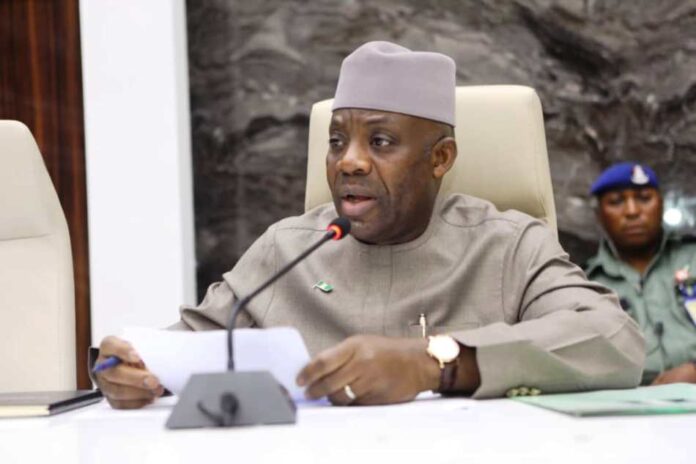
The decision was disclosed by the Minister of Education, Olatunji Alausa, on Wednesday, March 4, while briefing State House Correspondents at the end of the Federal Executive Council (FEC) meeting, presided over by President Bola Tinubu, at the Presidential Villa, Abuja.
Alausa stated that while a moratorium had earlier been placed on the establishment of private universities last year, the new directive extends to all tertiary institutions, adding: “The memo approved by Council today is the placement of a six-year moratorium on the establishment of new tertiary institutions- universities, polytechnics and colleges of education.”
Enthusing that Nigeria has largely addressed the issue of access to tertiary education, and must now focus on improving standards and ensuring the financial sustainability of existing institutions, the minister said: “Access is no longer the major issue in the country. We have a large number of tertiary institutions, both public and private.
“What we need now is to improve quality and ensure that existing private institutions remain financially sustainable.”
Citing statistics from the Joint Admissions and Matriculation Board (JAMB), Alausa said while about 2.3 million candidates applied for tertiary admission last year, nearly 228 universities recorded fewer than 50 applicants, adding that with the resolution of the prolonged industrial disputes involving the Academic Staff Union of Universities (ASUU), more students are expected to enroll in public universities, which could further reduce enrolment pressure on private institutions.
According to him: “Proprietors of private universities have invested significant resources. We must create an environment where their investments can remain viable, while we also improve the quality of education across both public and private institutions.”
The minister also announced that FEC approved the restoration of the National Commission for Mass Literacy, Adult and Non-Formal Education as a full commission, after it was earlier downgraded to a unit under the Federal Ministry of Education.
The decision, he said, aligns with Tinubu’s agenda to educate over 50 million Nigerians and expand digital literacy within the next two to three years, recalling that the Commission played a significant role in expanding literacy in rural communities through various platforms, including radio, television, public advocacy campaigns and community-based learning centres.
He noted that the move is critical, as Nigeria still has an estimated 56 million illiterate citizens, and “we cannot continue to have such a high number of illiterate citizens.”
Published:

Related articles

Recent articles
