
*Recommends Early Preparations, Equitable Remuneration For Officials, Coaches, Players
*Urges NSC To Concentrate On Policy Formulation, Regulation, Oversight
THE Fact-Finding Committee set up to investigate Nigeria’s recent poor outings in international football has alleged interference in the selection of players and appointment of coaches by some officials of the Nigeria Football Federation (NFF).
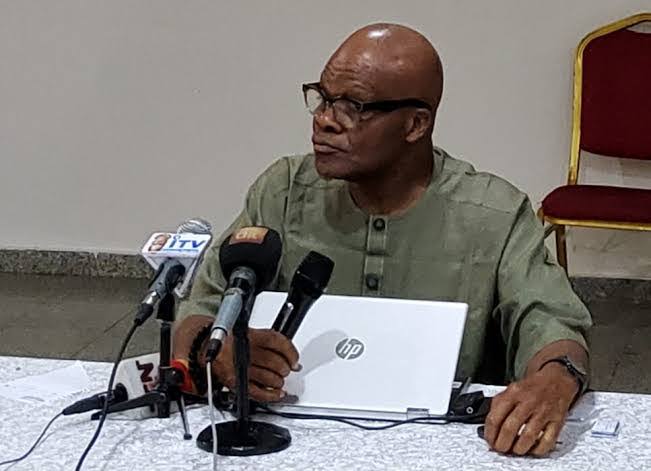
Chairman of the committee, Fanny Amun, who resigned his position after submitting the report, stated this on Monday, August 31, while presenting the committee’s findings in Abuja.
According to the News Agency of Nigeria (NAN), Amun alleged that some NFF officials, especially the resigned executive committee, had interfered in the selection of players and appointment of coaches, contrary to the responsibilities of the technical department, noting: “Some of the allegations were that board members were involved in team selection, recruitment of coaches and selling of players.”
Amun, however, said the committee would not mention the names of individuals allegedly involved, stressing that the report was intended to address systemic problems in Nigerian football, rather than witch-hunt individuals.
He said: “The committee was inaugurated on August 17 and was given 14 days to complete its assignment, but we concluded our report within three days after holding prolonged meetings.
“Our mandate was to unravel the root causes of Nigeria’s poor performances in recent international competitions, with particular reference to the Super Falcons’ elimination from the 2026 Women’s Africa Cup of Nations (WAFCON) in Morocco.
“We examined governance, finance, technical development, grassroots football and league administration, among other areas.”
He noted that the committee also received allegations that agents and other intermediaries influenced player selection during national team camps, saying such practices, if established, could undermine the quality and integrity of national teams.
He also criticised what he described as an inequitable remuneration system for national team delegations, where some officials allegedly received daily allowances, while players and coaches were not similarly compensated.
Amun explained that the committee believed that players and coaches deserved appropriate allowances and rewards for their services to the country, adding: “If you are paying all, you pay all. If you are not paying all, you don’t pay all.
“The question remains: Where is the equity there?”
He disclosed that the committee also examined the Super Falcons’ preparations for WAFCON and found shortcomings in the team’s preparation, internal coordination and management, and invited the coach, medical personnel and other officials to explain the circumstances surrounding the team’s performance.
He explained that the coach cited inadequate friendly matches and late arrival at the tournament venue as some of the challenges encountered during preparations, noting, however, that the committee believed the team could have explored alternative arrangements, including playing against local or lower-tier opposition, to improve preparations.
He said the committee also established that the injury suffered by defender, Ashleigh Plumptre, had been medically confirmed and that she was not fit to participate in the tournament, adding: “This was corroborated by team doctors in Nigeria and her foreign club.
“The committee found no evidence of players influencing team selection.
“We also observed that some officials allegedly gained unrestricted access to the team’s camp, a situation which could affect discipline and team cohesion.”
The report recommended clearer roles for coaches, technical officials, team secretaries, coordinators and other members of national team delegations, as well as early and well-coordinated preparation for national teams, improved player selection based on fitness and performance indices, and better cooperation between technical and medical teams.
On the administration of football, Amun called for reforms to the NFF statutes to accommodate more stakeholders and promote wider participation in the federation’s congress and a maximum of two terms in office for congress members, urging the Federation to create opportunities for new and experienced stakeholders to participate in football administration.
He said the committee was concerned that some individuals had remained in strategic positions for prolonged periods, creating unnecessary rivalry and limiting opportunities for others, while calling for better regulation of the Nigeria Premier Football League (NPFL), Nigeria National League (NNL), Nigeria Nationwide League One (NLO) and Nigeria Women’s Football League (NWFL).
Amun suggested the strengthening of league structures to improve funding, player development, coaching education and talent identification, while the Super Six competition should be used more effectively for scouting and national team development.
As such, the committee recommended improved use of technology for player registration, data management and age verification to prevent discrepancies in the football system, urging stronger regulatory and oversight mechanisms, as well as training and retraining of administrative and technical personnel.
He said the committee also examined the role of government and corporate organisations in football development, stressing the need for a more structured approach to funding.
He urged the National Sports Commission (NSC) to concentrate on policy formulation, regulation and oversight, rather than becoming directly involved in activities that should be handled by sports federations.
He called for improved development of refereeing in Nigeria, including better training, remuneration and exposure for referees, lamenting that poor officiating had continued to affect the credibility of domestic competitions; hence measures should be taken to improve the standard of refereeing.
The committee equally recommended that clubs participating in the domestic leagues should be supported to establish youth development structures, particularly at under-15 and under-18 levels, while revenue generated from the leagues should be channelled towards grassroots and youth development.
On the Super Falcons’ WAFCON campaign, Amun rejected the description of the team’s performance as a complete failure, recalling that Nigeria had won the continental title 10 times and had also been recognised for its achievement as defending champions before this year’s tournament; hence the team’s failure to retain the title should be viewed within the broader context of preparation, administration and technical management.
He reiterated that the committee’s report was not designed to punish individuals, but to identify weaknesses and recommend practical measures to reposition Nigerian football, urging the relevant authorities to consider and implement the recommendations in the interest of players, clubs and the country.
Other members of the committee were Alex Mana; former Super Falcons captain, Desire Oparanozie; Coach, Ladan Bosso; ex-international, Mutiu Adepoju; and Nasiru Jibril; as Secretary.


