
*Demands Debate, Response At January Assembly
*Shettima: We Won’t Tolerate Dehumanisation Of Nigerians
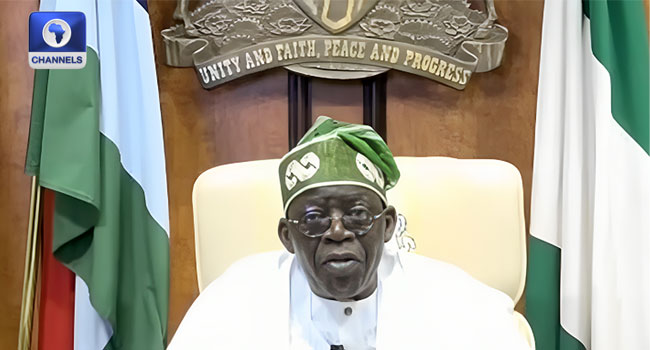
PRESIDENT Bola Tinubu has dragged South Africa before the African Union (AU) over recurring xenophobic and Afrophobic attacks on Nigerians and other Africans in the country, demanding urgent action from the continental body to protect the safety, dignity and rights of Africans across the continent.
Tinubu, who spoke through Vice President Kashim Shettima at the 21st Extraordinary Session of the Assembly of Heads of State and Government of the African Union in Luanda, Angola, said the attacks undermined the ideals of African solidarity, unity and peaceful coexistence.
He urged the AU to place the issue on the agenda of its 40th Ordinary Session of the Assembly scheduled for January next year, for consideration and appropriate action by African leaders, noting: “Nigeria wishes to express its concern over the recurring xenophobic and Afrophobic attacks against Africans and other nationals in South Africa.”
While acknowledging South Africa’s sovereign right to enforce its immigration laws and its contributions to the continent, Tinubu stressed that such attacks undermine African solidarity, unity and peaceful coexistence; hence require urgent collective attention.
He stated: “It is on this note that Nigeria calls on this August Assembly to place the matter on the agenda of the upcoming 40th Ordinary Session of the AU Assembly, scheduled for January 2027, for consideration and appropriate action.”
He charged the body and member states to intensify efforts to combat xenophobia and Afrophobia, saying dialogue, preventive diplomacy and collective action remained critical to preserving African unity.
On security challenges confronting Africa, the President expressed support for the adoption of the Luanda Action Plan as a practical framework for strengthening conflict prevention and addressing the root causes of instability, arguing that conflict prevention remains more cost-effective and sustainable than conflict management.
Tinubu warned that fragmented peace initiatives and growing external interference through foreign military forces, mercenaries and private defence contractors could undermine the AU’s conflict-prevention architecture and weaken the principle of African ownership.
He urged arms-producing and exporting countries to strengthen cooperation with African states to prevent weapons and ammunition manufactured within their jurisdictions from being diverted to terrorists and other non-state armed groups.
He said although the AU has established mechanisms for conflict prevention and resolution, limited trust among member states and inconsistent implementation have continued to constrain their effectiveness, while growing reliance on external actors weaken African institutions and the principle of African ownership.
Tinubu, therefore, called on member states to renew their commitment to collective responsibility for Africa’s peace and security, adding: “Let us therefore renew our collective commitment to solidarity, cooperation, and shared responsibility as we build the Africa we want.”
Shettima cautioned against humiliation and mistreatment of Nigerians and other African nationals, declaring that Nigeria will no longer tolerate any form of xenophobic or Afrophobic attacks against its citizens.
While calling for robust dialogue between Abuja and Pretoria, the vice president said the dignity and safety of Nigerians must be respected, as Nigeria would always speak out whenever its citizens were subjected to unacceptable treatment.
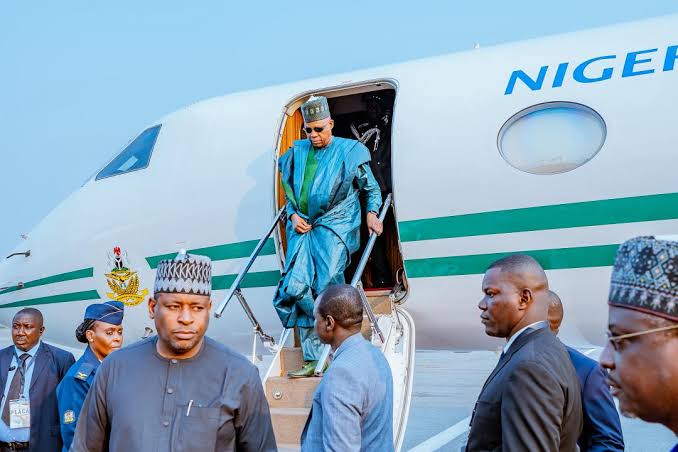
Speaking shortly before his departure for Nigeria, Shettima reminded South Africans of Nigeria’s historic sacrifices and contributions to the liberation of Southern Africa, saying those who benefited from such support should not turn around to humiliate Nigerians.
He stated: “Those whose palm kernels were cracked by benevolent spirits should learn to be humble.
“We were part of the struggle for the liberation of our brothers and sisters in Southern Africa, and we feel personally pained that our people have been picked up for humiliation.”
He said the Nigerian government and people would no longer accept situations in which Nigerians were dehumanised or subjected to degrading treatment, even as he said Nigeria was not seeking confrontation with South Africa, expressing the Federal Government’s commitment to resolving contentious issues through diplomacy, dialogue and constructive engagement.
According to him: “We don’t want to overheat the polity, but once in a while, you have to make it very clear, vehemently clear, that certain situations are unacceptable, and we’ll work things out.”
Shettima urged South African authorities to exercise restraint in the enforcement of immigration laws, saying legitimate immigration enforcement must not translate into the violation of the rights, dignity or safety of Nigerians and other African nationals.
He urged stronger institutional measures to protect foreign nationals, particularly Africans, from harassment, humiliation and violence.


