
BY PROFESSOR STEVE AZAIKI
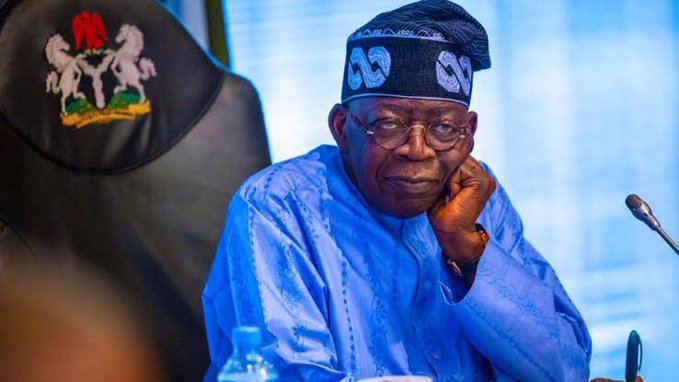
THE Presidency of Bola Ahmed Tinubu, initiated in May 2023, represents a definitive rupture in the fiscal history of Nigeria’s Fourth Republic.
For decades, petrol subsidies drained public finances, encouraged rent‑seeking and postponed hard, but necessary choices. Its removal reduced fiscal leakage and created space for more productive public spending.
By late 2025, inflationary pressures began to ease and government revenues, particularly non‑oil receipts, showed improvement.
Yet, these gains come amid persistent public anxiety. The initial subsidy removal in 2023 triggered soaring living costs, exacerbating inequality and polarisation, as Tinubu himself acknowledged in October 2025, when declaring the “worst is over.”
Economic woes have fueled legitimacy questions, with critics pointing to a disconnect between macroeconomic stabilisation and everyday hardships, echoing the structural adjustment programmes of the 1980s that deepened social divides.
The governance model employed here is one of “aggressive correction.” The administration argues that the removal of the subsidy has halted the hemorrhaging of the national treasury, doubling the monthly distributable revenue shared by the three tiers of government. Yet, the utilisation of these improved revenues has become a point of intense scrutiny.
The economic outlook for 2026 is delicately poised. While the IMF maintains a positive stance based on fiscal reforms, local analysts, such as Veriv Africa and Agusto & Co. warn of “reform fatigue.”
The sluggish growth in the agricultural sector, hindered by persistent insecurity and the high cost of inputs, such as fertilizer, continues to drag down the broader recovery.
As the country approaches the 2027 cycle, the administration’s ability to convert macroeconomic stabilisation into improved daily life for the average Nigerian remains its greatest hurdle.
These outcomes matter for the nation as a whole. Yet, it is equally true that the transition imposed real pain. Transport costs rose, food prices climbed and household budgets tightened. A nationalistic response does not deny this reality; it insists instead that shared sacrifice must be matched by shared purpose.
Reform cannot be seen as something done to the people by the state, but as something undertaken with the people in the long‑term interest of the republic.
THE 2025 TAX REFORM ACTS: A TECHNICAL OVERHAUL OF STATE REVENUE
THE 2025 tax reforms were designed to modernise Nigeria’s fiscal architecture, broaden the tax base and reduce over‑reliance on oil. They simplified outdated rules, brought parts of the digital economy into the tax net and shielded low‑income earners from personal income tax, while tightening corporate and capital gains taxation.
In a healthy polity, taxation is not merely extraction; it is contribution. However, contribution requires trust. Many Nigerians perceive the reforms as an added burden, because the reciprocal benefits of quality public services, infrastructure and social protection remain insufficiently visible.
A nationalistic ethic demands honesty on both sides: Citizens must recognise that a viable state requires domestic revenue, while the government must demonstrate, concretely and locally, that taxes paid are taxes working.
MONETARY GOVERNANCE AND THE CARDOSO REFORMS: TAMING THE NAIRA
THE Central Bank of Nigeria (CBN) has undergone a period of intense reform under Governor Olayemi Cardoso, aimed at restoring the bank’s “orthodox” mandate of price stability and monetary neutrality.
The transition from the era of “monetary financing” of the fiscal deficit, which saw the CBN issue trillions in “Ways and Means” advances to the government, to a regime of strict inflation targeting has been the hallmark of this tenure.
Central to these reforms was the adoption of the “willing buyer–willing seller” foreign exchange framework. This move was intended to eliminate the arbitrage opportunities inherent in the previous multiple exchange rate system, which had facilitated massive rent-seeking and discouraged foreign direct investment.
The initial result was a volatile devaluation, with the naira fluctuating between ₦1,035 and ₦1,700 per dollar in late 2024, resulting in a 40 per cent loss of value.
However, by September 2025, headline inflation fell for the sixth consecutive month to 18.02 per cent, and the gap between official and parallel market rates narrowed to less than two percent.
The strengthening of Nigeria’s global financial standing was further bolstered by the joint confirmation by the CBN and the Nigerian Financial Intelligence Unit (NFIU) of progress in the country’s anti-money laundering and counter-terrorist financing framework.
This achievement is seen as a turning point for Nigeria’s reintegration into the global financial mainstream. Furthermore, the operationalisation of the Dangote Refinery at 650,000 barrels per day, the world’s largest single-train refinery, has begun to alter the fundamental demand-supply dynamics of the foreign exchange market.
By late 2025, the refinery projects a potential end to refined petroleum imports, a development that would significantly ease the pressure on the naira by reducing the demand for dollars by nearly 30 per cent.
Despite these technical successes, monetary tightening has come at a cost. The CBN maintained high interest rates throughout much of 2025 to curb money supply, which some analysts argue has contributed to the “sluggish” growth in the manufacturing and services sectors.
As the country entered 2026, the bank was expected to begin a gradual interest rate cut, potentially 150-250 basis points, contingent on the sustained deceleration of inflation.
This delicate balancing act between stabilising the currency and fostering credit for production will define the economic mood of the electorate as they look toward 2027.
INSTITUTIONAL EROSION: THE DEFECTION EPIDEMIC AND THE ONE-PARTY DRIFT
NIGERIA’S political culture remains dominated by zero‑sum competition, where victory is total and defeat is existential. Recent waves of political defections and the concentration of power have intensified fears about weakened checks and balances.
The wave of political defections to the ruling All Progressives Congress (APC) in 2024-2025 signals deeper shifts in Nigeria’s democratic ecosystem. Research indicates an 1,100 per cent rise in defections, with reported incidents increasing from 15 in 2019 to 180 by September 2025. High-profile moves, including governors from opposition strongholds, such as Plateau State, have swelled APC control to 28 states by late 2025.
Are these ideological realignments, survivalist bets on federal patronage or symptoms of a weakening opposition? Evidence leans toward the latter: The Peoples Democratic Party (PDP) attributes defections to federal marginalisation, forcing politicians into the APC fold.
Tinubu has framed this as exposing opposition “cracks,” yet it risks diminishing democratic pluralism.
Historically, such consolidations, reminiscent of the National Party of Nigeria’s (NPN) dominance in the Second Republic, have bred complacency and reduced accountability.
For 2027, this trend could stifle competition, unless opposition forces coalesce, as suggested in merger talks. The administration must reflect on whether fostering a vibrant multiparty system, rather than hegemony by default, better serves long-term stability.
The consequence of this trend is the hollowing out of Nigeria’s multi-party system. Between July 2024 and July 2025, significant legislative majorities were redrawn, fueling public distrust in the democratic process.
Opposition parties have been decimated by internal crises and leadership vacuums, leaving the legislature increasingly following the lead of the executive, rather than serving as a robust check on authority.
This institutional hollowing is further facilitated by legal loopholes. Section 68(1)(g) of the 1999 Constitution mandates that a legislator must vacate their seat if they defect before the end of their term, unless the defection is due to a “division” or “merger” within the party.
However, defectors have increasingly exploited these ambiguities, claiming internal crises without substantial evidence. Recent Supreme Court rulings (2024-2025) have inadvertently shielded defectors by elevating the evidentiary standards for declaring a seat vacant, requiring “cogent and verifiable” proof that is often beyond the reach of opposition litigants.
As the 2027 elections approach, the emergence of a de facto one-party state presents a significant risk to the democratic trajectory of the nation. When personal survival and patronage trump collective governance, the social contract is weakened and voter turnout is likely to diminish, as citizens perceive the electoral process as a mere theater for elite realignment.
A mature democracy requires coopetition: Principled competition within a shared commitment to national survival and progress. Opposition parties are not enemies of the state; ruling parties are not owners of it.
Institutions function best when political actors compete on ideas and performance, while cooperating to protect the constitutional order, judicial independence and democratic norms.
This shift from destructive rivalry to constructive competition is essential for Nigeria’s stability.
THE JUDICIAL SENTINEL: INTEGRITY, DELAYS, AND THE PERCEPTION OF SELECTIVE JUSTICE
ALLEGATIONS of institutional politicisation have intensified, particularly regarding the judiciary and anti-corruption bodies, such as the Economic and Financial Crimes Commission (EFCC).
A poignant case study emerges from Bauchi State Governor, Bala Mohammed’s December 2025 accusations, where he claimed the federal government was deploying the EFCC for “political witch-hunts” against opposition figures, allegedly at the behest of Federal Capital Territory (FCT) Minister, Nyesom Wike.
Mohammed, facing probes into his own past money-laundering trial, argued this represented vendetta politics, undermining the EFCC’s credibility.
The EFCC swiftly dismissed these as “baseless,” emphasising its independence and recalling Mohammed’s pre-governorship legal entanglements.
For students of political science, this episode is a classic example of the fear of “lawfare,” using legal and judicial instruments as political weapons. The primary risk, and a core lesson in the study of state legitimacy, is that when anti-corruption bodies are perceived as tools of the ruling party, regardless of the truth of any single accusation, they lose the public trust essential for their function. Their institutional neutrality is hollowed out and their ability to fight corruption legitimately is severely damaged.
This weakening of state institutions is mirrored by a parallel weakening of the political opposition itself.
The Africa Judges and Jurists Forum (AJJF) and other international bodies have noted that contemporary threats to judicial independence in Africa are often subtle, involving the intimidation of judicial officers and the manipulation of budgetary allocations.
In Nigeria, the “commandist tradition” inherited from decades of military rule continues to influence the psyche of the citizenry and the behaviour of the political class, who often view the law as an obstacle to be bypassed, rather than a framework to be upheld.
Without urgent reforms, such as the introduction of a jury system for serious criminal cases, the judiciary risks becoming a decorative, rather than functional pillar of democracy by 2027.
Institutions must be defended, not because they favour one side, but because they belong to the nation. In a country as diverse and contested as Nigeria, impartial courts and credible enforcement bodies are not luxuries; they are the glue that holds the federation together.
THE RIBADU DOCTRINE: NATIONAL SECURITY AND THE US-NIGERIA JOINT WORKING GROUP
THE security architecture of the Tinubu administration has shifted from the purely kinetic approach of its predecessors toward a strategy of integrated intelligence and global partnership, led by his National Security Adviser (NSA), Nuhu Ribadu.
This “Ribadu Doctrine” recognises that Nigeria’s internal conflicts- insurgency, banditry and mass abductions- are increasingly transnational and require sophisticated inter-agency coordination.
In late 2025, the administration launched the Nigeria Counter-Terrorism Strategic Plan 2025-2030, which aims to transform the National Counter- Terrorism Centre (NCTC) into a regional hub for the Sahel and West Africa.
A key milestone of this strategy is the operationalisation of the Multi-Agency Anti-Kidnap Fusion Cell, developed with support from the United Kingdom’s (UK) National Crime Agency (NCA) to address the resurgence of mass kidnappings in rural communities.
The formation of the US-Nigeria Joint Working Group in November 2025 marks a significant escalation in bilateral cooperation. This group, which includes the Ministers of Defence, Foreign Affairs and Interior, focuses on intelligence sharing, border security and counter-terrorism operations.
This partnership is particularly critical, given the US’ recent designation of Nigeria as a “Country of Particular Concern” (CPC) over alleged religious freedom violations, a designation that Nigerian officials, led by Ribadu, visited Washington to challenge and resolve.
Despite a 160 per cent increase in the security budget between 2023 and 2024, the results on the ground remain mixed. While there has been a slight reduction in terrorism-related deaths, according to the Global Terrorism Index, the northern region continues to bear the heaviest impact of rural banditry and terror group attacks.
In April 2025, state governors, including Babagana Zulum of Borno, expressed profound concern that government forces were “losing ground” in some areas due to systematic violence.
The internal debate over the role of a civilian NSA in a country with a long history of military rule is a recurring theme. Critics have called for Ribadu’s replacement with a retired military officer, arguing that only a soldier can effectively command respect within the armed forces.
However, the administration and many security experts have rejected this as an “outdated and dangerous” perspective, asserting that modern security challenges, ranging from cyber-threats to dismantled complex criminal networks, require strategic intelligence and policy depth, rather than just combat experience.
Security remains the most immediate test of state legitimacy. The Tinubu administration’s shift toward intelligence‑led, inter‑agency and internationally-coordinated security reflects modern realities.
However, security is not only a matter of hardware and strategy; it is also social trust, economic inclusion and local legitimacy. A nationalistic approach recognises that security failures wound the entire nation, regardless of region or religion, and that solutions require unity, rather than politicisation.
GLOBAL REALIGNMENT: THE 4DS, BRICS, AND WEST AFRICAN LEADERSHIP
NIGERIA’S foreign policy under Tinubu has moved from “passive to active global engagement,” guided by the “4Ds” doctrine- Democracy, Development, Demography and Diaspora.
This framework seeks to leverage Nigeria’s status as Africa’s most populous nation and largest economy to secure more ownership of international decisions affecting the continent.
The most consequential shift in this arena was Nigeria’s admission as a partner country into the BRICS bloc in 2025. This move signals a strategy of “strategic hedging” or “pragmatic autonomy,” whereby Abuja deepens economic ties with China and the BRICS bloc, while preserving security cooperation with traditional Western partners, such as the U.S. and the EU.
Trade data from the first three quarters of 2025 underscores the impact of this engagement: Trade with BRICS countries rose to over ₦5.41trillion, outpacing exports to several traditional partners.
At the regional level, Nigeria’s leadership within ECOWAS remains central, but embattled. The sub-region is confronting a convergence of “unconstitutional power transitions” in states, such as Niger and Mali, and evolving security threats in the Sahel.
Nigeria has maintained a principled position on democratic governance, while engaging in “stabilising diplomacy” to keep channels open with key actors in neighboring states.
The administration has also invested heavily in “soft power,” recognising the Nigerian Diaspora as a major economic actor. Remittances have become a significant contributor to growth, and the government has begun to frame Nigerians abroad as “cultural ambassadors” who shape the global narrative of the country.
This is coupled with a more assertive stance on international finance reform and Global South activism, particularly concerning UN Security Council reform.
However, analysts warn that overt alignment with a China-led bloc could alienate Western investors or complicate access to Eurobond markets, requiring a “calibrated strategy” to avoid the Great Power competition it seeks to navigate.
Public confidence was tested further by controversy over a multimillion‑dollar international lobbying contract in early 2026. Critics argued that the expenditure appeared misaligned with pressing domestic needs in health, education and security.
Foreign policy should not be read through partisan lenses, but through the prism of national interest: Economic opportunity, security cooperation and the welfare of Nigerians at home and abroad. Unity at home strengthens credibility abroad.
This debate should be understood not as an argument against diplomacy or reputation management, but as a reminder of sequencing and symbolism. In times of national strain, policy choices must visibly privilege domestic cohesion. A confident nation earns its reputation abroad primarily by delivering dignity, safety and opportunity at home.
THE VENEZUELA MIRROR: A CAUTIONARY TALE OF RESOURCE GOVERNANCE
THE economic and institutional trajectory of Nigeria under the current administration has prompted comparative analyses with other oil-rich, middle-income nations that suffered democratic and economic collapse, most notably Venezuela. Both nations are “geologically blessed,” yet have historically struggled with “rentier failure.”
The “Venezuela Mirror” offers a sobering warning: When oil prices and revenues become the sole foundation of government power, the abuse of funds, militias and resources often follows.
Venezuela’s transition from one of Latin America’s richest nations to a “narco-state” with hyperinflation and 95 per cent impunity was a textbook failure of governance that began with the hollowing out of democratic institutions and the militarisation of the economy.
Analysts identify troubling similarities in the “Japa” phenomenon, the collapse of hospitals due to supply shortages and the coercion of vulnerable populations into illegal trades as they struggle to make ends meet.
However, unlike Venezuela, Nigeria has initiated significant market reforms, such as currency flotation and subsidy removal, that are intended to prevent a similar collapse. The question remains whether these reforms were “hastily executed” without sufficient palliatives, potentially accelerating the very social crisis they were meant to avoid.
The broader lesson from Norway and Canada, nations that successfully converted resource wealth into sustainable development, is that “strong institutions” and “diversification strategies” are the only long-term safeguards against the resource curse.
For Nigeria, the path to 2027 requires a decisive shift away from the “barracks mentality” of the past and toward a governance model that prioritises institutional accountability over elite bargains.
Nigeria’s reforms- subsidy removal, currency adjustment and fiscal tightening- suggest a willingness to confront reality. The challenge now is to humanise reform: To protect the vulnerable, communicate honestly and pace change in a way that sustains public consent.
A WORLD THAT IS WATCHING: GLOBAL SCRUTINY AND REPUTATIONAL STAKES
INTERNATIONAL eyes- the media, investors, Diaspora and governments- scrutinise Nigeria’s signals. Perceptions are improving: Credit upgrades from Moody’s and Fitch cite policy credibility, and Diaspora media highlights global relevance.
Yet, handling dissent draws concern, with calls for restraint amid protests. Reputational costs from corruption or instability could deter FDI; benefits lie in projecting stability to attract partners in a multipolar world.
Nigeria’s current ordeal is not unique. Many nations have endured painful transitions on the path to stability and growth. What distinguishes success from failure is whether hardship fragments society or forges solidarity.
This is a moment for national maturity: For citizens to criticise without delegitimising the state; for politicians to compete without undermining the nation; and for the government to lead with empathy, transparency and inclusion.
THE MILITARY AND DEMOCRATIC BOUNDARIES: LESSONS FROM HISTORY
NIGERIA’S military has reaffirmed loyalty to democracy, dismissing coup rumours in 2025 and aiding regional stability, as in Benin’s averted intervention.
Drawing from the 1966 coup’s chaos, civilian supremacy remains paramount. In an era of Sahelian coups, professionalism and restraint are vital to prevent erosion of democratic gains since 1999.
CONCLUSION: STATESMANSHIP AND THE SOVEREIGN LEDGER
AS President Bola Ahmed Tinubu approaches the second half of his first term, the “Sovereign Ledger” of his administration presents a study in contrast.
There is an undeniable boldness in the fiscal and monetary reforms that have brought the nation back from the brink of bankruptcy and restored its standing in the global financial community.
The technical merits of the 2025 Tax Reform Acts and the “willing buyer–willing seller” FX framework suggest a commitment to modernising the Nigerian State that is unprecedented in the Fourth Republic.
Yet, this modernisation is occurring within a fragile institutional shell. The “defection epidemic” and the decimation of the opposition, the persistent delays in the judiciary and resurgence of rural insecurity threaten to undermine the very stability that the economic reforms seek to achieve.
The 2027 general elections will be a crucible for Nigerian democracy. If the administration continues to prioritise elite patronage and the consolidation of power over the rebuilding of the social contract, it risks entrenching a system of “individual opportunism” that will eventually alienate the populace.
A sobering, statesman-like diagnosis suggests that Nigeria can still avoid the “failed-state” scenario if it acts decisively to rebuild legitimacy.
This involves Fiscal Transparency: Implementing digital anti-corruption platforms to ensure that the improved revenues from subsidy removal actually benefit the most vulnerable.
- Institutional Reform: Strengthening the independence of the judiciary and the EFCC to ensure they are not perceived as instruments of selective justice.
- Human Capital Investment: Redirecting resources from elite subsidies, such as the Hajj and national parades, to healthcare and education to halt the “Japa” drain.
- Regional Leadership: Using ECOWAS to contain regional instability, thereby raising the cost of external interference and Great Power rivalry.
Nigeria remains a “hygenda” was a genuine blueprint for national reconstruction or a sophisticated rebranding of the old patronage-driven order.
The state of the nation as it approaches 2027 is one of precarious potential; It is a nation that has the tools for greatness, but remains haunted by the institutional ghosts of its past.
For the administration, the challenge is no longer merely to reform the economy, but to save the soul of the brid democracy” at a strategic crossroads. The coming two years will determine whether the “Renewed Hope” ademocratic process itself.
(Azaiki is a fomer secretary to the Bayelsa State Government and a member of the House of Representatives from 2015 to 2019)


