

THE Delta State Government, Niger Delta Development Commission (NDDC) and Chevron Nigeria Limited have moved to strengthen collaboration for the construction of the proposed Omadino-Okerenkoko-Escravos road and bridges project in the state.
The project, spanning about 70 kilometres, with 29 bridges, is expected to improve connectivity across riverine communities and stimulate economic development in the Niger Delta region.
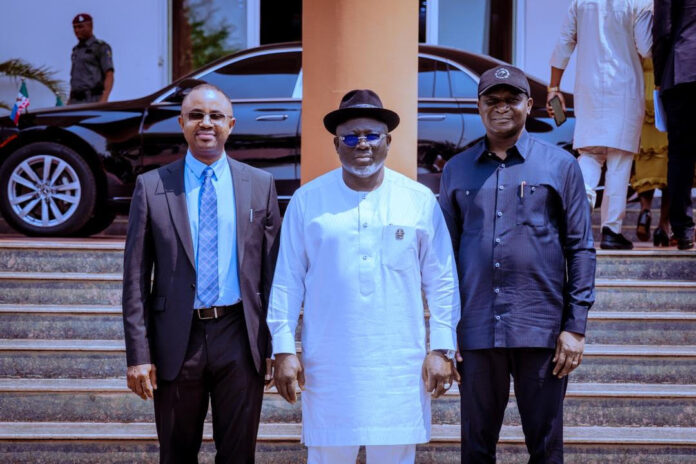
Governor Sheriff Oborevwori, who expressed the state government’s readiness to partner with the NDDC and Chevron during a meeting with the leadership of NDDC and Chevron at Government House, Asaba, commended the Commission’s Managing Director, Sam Ogbuku, for the progress recorded under his leadership, pledging the state’s commitment to ensuring the project becomes a reality.
Oborevwori said the road was critical to the development of riverine communities and would open up the area for increased economic activities, adding: “We are ready to partner with NDDC on this project, because it is very key to those living in the riverine areas. Delta State believes in executing projects that people will see and appreciate.”
The governor, however, stressed that the state government would only support the project if it was awarded to a reputable construction company capable of delivering it to completion without abandoning the work, and would set up a technical team to work with the NDDC and Chevron to review the project design, determine the current cost and outline the contributions expected from each stakeholder.
He said the team would also address issues, such as right-of-way, realignment of sections of the road and other technical considerations necessary for the successful execution of the project, stressing that the state had consistently demonstrated its willingness to support major infrastructure projects, including those initiated by the Federal Government, while undertaking several strategic roads and flyover projects on federal roads across the state.
Earlier, Ogbuku said NDDC and Chevron were in the state to brief the governor on the progress made in discussions regarding the project, recalling that the project was originally awarded by the Commission many years ago, but remained incomplete, prompting it to explore partnerships as part of efforts to fulfil President Bola Tinubu’s directive that all abandoned projects in the region be completed.
He stated that the road project would deliver enormous benefits to Delta State and the entire Niger Delta by improving access to remote communities and boosting economic activities.
Ogbuku disclosed that Chevron had already secured approvals from its joint venture partners to participate in the project and several meetings had been held between the parties to advance discussions.
He said technical teams from the NDDC, Delta State Government and Chevron would meet to validate the existing design, review project costs and carry out environmental and geotechnical studies, as well as conduct community engagements to address right-of-way issues and other concerns that could affect the implementation of the project.
Speaking on behalf of Chevron, Segun Kuteyi expressed its readiness to partner with the NDDC and Delta State Government to deliver the project, noting that Chevron had operated in Nigeria for over six decades and remained committed to supporting infrastructure development in communities within its areas of operation.
Kuteyi explained that the road would enhance connectivity between Warri and Escravos and provide significant benefits to communities and institutions in the region, including the Nigerian Maritime University in Okerenkoko and emerging small and medium-scale enterprises.
He stated that the successful execution of the project would require strong collaboration among all stakeholders, assuring that Chevron was committed to building the necessary partnerships that would ensure the safe and timely delivery of the project, expected to take several years to complete due to its scale and challenging terrain.
The stakeholders agreed to establish a joint technical committee to determine the final cost of the project, review the design to reflect current realities and outline the contributions of all participating parties before the signing of a Memorandum of Understanding (MoU) for the commencement of the project.
Published:

Related articles

Recent articles
