
BY PROFESSOR STEVE SINIKIEM AZAIKI
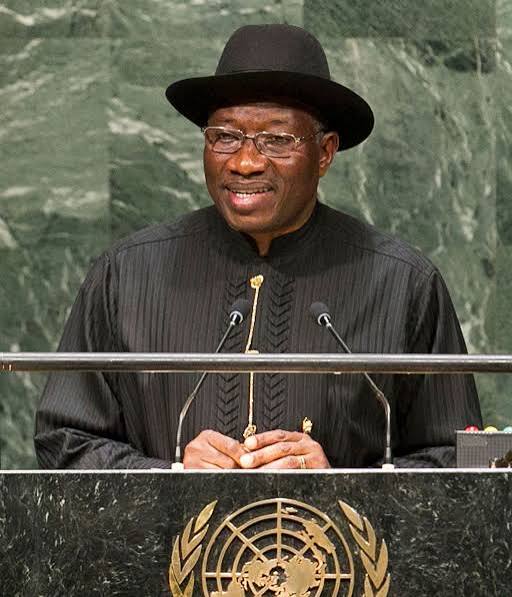
ON April 3, this year, the Africa Policy and Research Consortium (APRC), a consortium of organisations from 27 African countries working with multinational and international agencies and headquartered in Canada, wrote to President Bola Tinubu, and the African Union (AU), urging Nigeria to nominate former President, Goodluck Ebele Jonathan, for the office of Secretary General of the United Nations (UN).
The consortium also reached out to the National Think Tank, Nigeria, co-chaired by Bolaji Akinyemi, a former minister of External Affairs, to lend support to this initiative.
In my capacity as Co-Chairman of the National Think Tank, I had the privilege of personally presenting the proposal to former Jonathan. After listening attentively, the former President graciously expressed his appreciation, but stated unequivocally that he had no interest in contesting for the position.
His decision deserves respect. Yet, as an African committed to the continent’s place in global affairs, I could not help but feel a profound sense of disappointment. In my opinion, Africa has lost an opportunity that may not return for many years.
The office of Secretary General of the UN is one of the most consequential positions in international diplomacy. The successful candidate must command global respect, possess unquestionable integrity, demonstrate political neutrality, understand the complexities of international relations and enjoy the confidence of both developed and developing nations.
Few African leaders today embody these qualities more convincingly than Jonathan.
His journey from a humble background in the Niger Delta to the Presidency of Africa’s largest democracy remains one of the most remarkable stories in contemporary African politics.
More importantly, his conduct in office and after leaving office has earned him enduring international respect.
His concession of electoral defeat in 2015 remains one of the defining moments in Nigeria’s democratic history. At a time when many leaders across the world held on to power at all costs, Jonathan chose peace over personal ambition.
His famous declaration that no political office is worth the blood of any citizen resonated far beyond Nigeria’s borders and elevated his moral standing globally.
Since leaving office, Jonathan has reinvented himself as one of Africa’s foremost ambassadors for peace and democracy. Through election observation missions under ECOWAS, the AU, Commonwealth and other international organisations, he has helped strengthen democratic governance across the continent.
He has mediated political disputes, encouraged constitutional order and consistently advocated dialogue instead of violence.
His recent diplomatic engagement in helping to reduce political tensions in Senegal further demonstrated his credibility as an elder statesman trusted across national boundaries. These are precisely the attributes the UN seeks in its chief administrative officer.
This year’s contest for the secretary generalship has attracted an impressive field of candidates. Among the African contenders, two names stand out- former President Macky Sall of Senegal and veteran Ugandan diplomat, Olara Otunnu.
Sall is an accomplished statesman who led Senegal for 12 years and enjoys considerable international recognition, while Otunnu, a distinguished diplomat, served with distinction at the UN, including as Under-Secretary General and Special Representative for Children and Armed Conflict. Both men deserve respect and admiration.
Yet, in my considered opinion, neither possesses the unique combination of democratic legitimacy, executive leadership, conflict mediation experience, continental acceptance and global moral authority that Jonathan brings to the table.
Even more significant is the possibility that Africa could have united behind a single consensus candidate.
From my engagements with colleagues across East Africa, there appeared to be considerable goodwill towards the prospect of a Jonathan candidacy. Likewise, Sall enjoys a longstanding personal friendship with Jonathan.
Their mutual respect, strengthened further by Jonathan’s constructive diplomatic role during Senegal’s recent political challenges, might well have provided the basis for discussions towards an African consensus.
No one can say with certainty that such discussions would have succeeded. International politics offers no guarantees. Nevertheless, leadership often requires recognising moments of historic opportunity before they disappear.
The geopolitical climate also appeared unusually favourable. There were indications that the five permanent members of the UN Security Council- the United States (US), United Kingdom (UK), France, Russia and China- were prepared to consider a highly respected African candidate capable of building bridges across geopolitical divides.
Jonathan’s reputation for moderation, consensus-building and principled leadership would likely have made him an attractive option to many stakeholders.
For decades, Africa has argued, quite rightly, that global governance institutions must better reflect contemporary realities. The continent has demanded reform of the Security Council, greater representation in international financial institutions and more meaningful participation in global decision-making.
Such aspirations require not only persuasive arguments, but also outstanding candidates.
Opportunities to present an African of Jonathan’s stature for the highest office in the UN are exceedingly rare. History may well record that Africa allowed one such opportunity to pass.
Nigeria, as Africa’s largest nation by population and one of its foremost diplomatic powers, has historically played a central role in shaping continental leadership.
When Nigeria speaks with clarity and purpose, Africa often listens. Conversely, when Nigeria hesitates, the continent sometimes loses momentum.
This is not to diminish the distinguished African candidates currently in the race, who are accomplished leaders that have every right to seek the office.
Rather, it is to express the belief that Jonathan represented a singular opportunity to unite Africa behind a candidate whose personal story, democratic credentials, diplomatic experience and international reputation transcended regional and political divides.
Jonathan has made his decision, and it deserves our respect. But as Africans, we are equally entitled to reflect on what might have been. Had he accepted the call to serve, Africa could have entered this historic contest with one of its most respected sons.
Whether victory would ultimately have followed can never be known. What is certain, however, is that the continent would have competed from a position of exceptional strength.
Sometimes history is shaped not only by the opportunities we seize, but also by those we quietly allow to slip away.
In my judgment, this is one of those moments.
(Azaiki is Co-Chairman of National Think Tank, Nigeria)


