
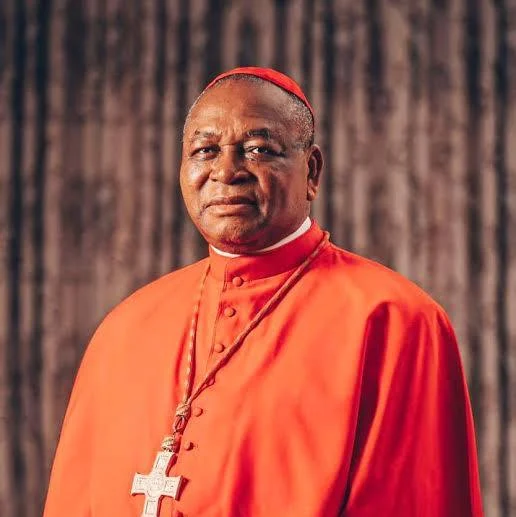
THE Archbishop Emeritus of Abuja, John Cardinal Onaiyekan, has declined to respond to criticisms by the Presidency, insisting that Catholic Bishops have already delivered their message to President Bola Tinubu and were only interested in whether it would influence governance.
Recall that Tinubu hosted the Catholic Bishops’ Conference of Nigeria (CBCN) at the State House, Abuja, on July 28, for an interaction and presentation of their views on Nigeria’s the economy, security and democracy, among others.
Onaiyekan later granted interviews, where he disclosed the sentiments of the bishops, indicating that Tinubu was far from current realities on ground, a position dismissed by the Presidency.
However, Onaiyekan, in an interview with Frontline, a current affairs programme on Eagle 102.5 FM, Ilese-Ijebu in Ogun State, on Monday, August 3, said the CBCN had no intention of engaging in a public exchange with government spokespersons, following the meeting.
He dismissed suggestions by a presidential spokesman, Daniel Bwala, that the bishops were speaking only for Catholics, insisting their intervention was based on a moral responsibility to all Nigerians.
According to him: “We didn’t go there just as Catholic bishops pushing the Catholic agenda. No. We went there as people who are with the spiritual mandate to speak to anybody in the name of God.”
He declined comment on subsequent reactions to his interview by presidential spokespersons, saying: “I would not even answer that question. We have no response for them. We have spoken and the only response we are waiting for is whether it is affecting the way they are governing.
“That some of the supporters of government and the state and spokesperson may have their own idea about what they think they should be saying on behalf of their principal, is their business, not mine.
“As for response to the things we are hearing, I don’t even have to say anything, because the social media is full of response from Nigerian people and that for me is more than enough.”
Onaiyekan said the meeting with Tinubu was initiated by the CBCN after months of waiting for approval, and was neither intended as an evangelistic mission nor an attempt to advance the interests of the Catholic Church, but rather an opportunity to present the bishops’ concerns about governance and welfare of Nigerians as part of their pastoral responsibility.
He stated: “The Bishops visited President Tinubu last week and we requested for audience. It took some months before we were granted the audience and we prepared to see him, and the main reason we wanted to see him was not to go on an evangelical mission.
“We didn’t go there to preach to him and try to see whether we could convert him to our Catholic Church, but we went there to share our views and thoughts about the government, which he heads, hoping that our ideas will be taken into consideration. That is what took us to the State House.
“We are hoping that our meeting with the President or our dialogue with the government of Nigeria did not end with that visit.
“We are hoping that somehow, he will invite us, not necessarily to meet him, I mean President Tinubu, but at least to open up fairness for us to give more information, more concerns that we have, than we could give in the 10 minutes talk that we gave to him.”
Onaiyekan stressed that the bishops had no partisan political ambitions, challenging government to focus on the substance of their message, rather than the personalities behind it, noting: “I have told you already that I am not even prepared to start engaging anybody.
“Don’t forget that I was not defending my thesis. The document was prepared by the bishops of Nigeria, and we are a big number, and it was passed unanimously.
“We don’t have any political ambitions for anything. Even our church does not even allow us to get engaged in party politics. So, even if I wanted to be a presidential candidate, I can’t be.”
On the economy, he acknowledged government’s emphasis on macroeconomic indicators, but argued that improvements should ultimately be measured by the quality of life of ordinary Nigerians, saying: “If we admit that the role of government is the welfare of citizens, then it means we are not going to judge the success of our government on the basis of the statistics from GDP, from the World Bank, or whatever.
“The important thing is, what, how is the life of the Nigerian?”
The Cardinal identified youth unemployment as one of Nigeria’s gravest challenges, saying: “The terrible thing now is many of our young people that have struggled to finish university are all going around with their degrees. They are unable to get a job.
“Therefore, they can’t even think of marriage. They can’t think of starting a family. They can’t think of planning their life. That is terrible.
“The only thing it takes is a political will to do the right thing, to be honest in how government is run, to be just to everybody, to be fair in this.”
He expressed hope that other Christian and Muslim leaders would engage the government on issues affecting Nigerians, saying collective action was needed to address the country’s challenges.
“We are hoping that our message will be shared by other religious leaders in Nigeria, first other Christians in the context of CAN and, indeed, other believers, including our Muslim religious leaders.
“It would be wonderful if we could organise a meeting with Mr. President and all the religious leaders in Nigeria, talking together,” he said.


